10 Essential Tips to Heal Eczema
- Dr Amna's Clinic
- Blog
- 10 Essential Tips to Heal Eczema
10 Essential Tips to Heal Eczema in
South Asian Skin:
A Complete Guide
-
Dr Amna Clinic
- 4 min read
- February 28, 2026
If you’re dealing with eczema (atopic dermatitis) and have South Asian or darker skin, you’ve likely experienced unique challenges that many people don’t understand. Maybe your doctor initially missed the diagnosis because your eczema doesn’t look “red” like textbook pictures. Perhaps you’re struggling with dark spots that remain long after your eczema heals. Or maybe you’re frustrated by the lack of information specifically addressing eczema in our skin tones.
You’re not alone, and there is help. This comprehensive guide addresses the specific needs of South Asian patients with eczema, taking into account how the condition appears differently on darker skin and the unique environmental and cultural factors we face.
Understanding Eczema in South Asian Skin
Eczema is a chronic inflammatory skin condition that causes dry, itchy patches on your skin. While it affects people of all ethnicities, research shows that eczema is actually more prevalent in Asian and Black individuals compared to white individuals, with unique presentation patterns and challenges.
How Eczema Looks Different on Darker Skin
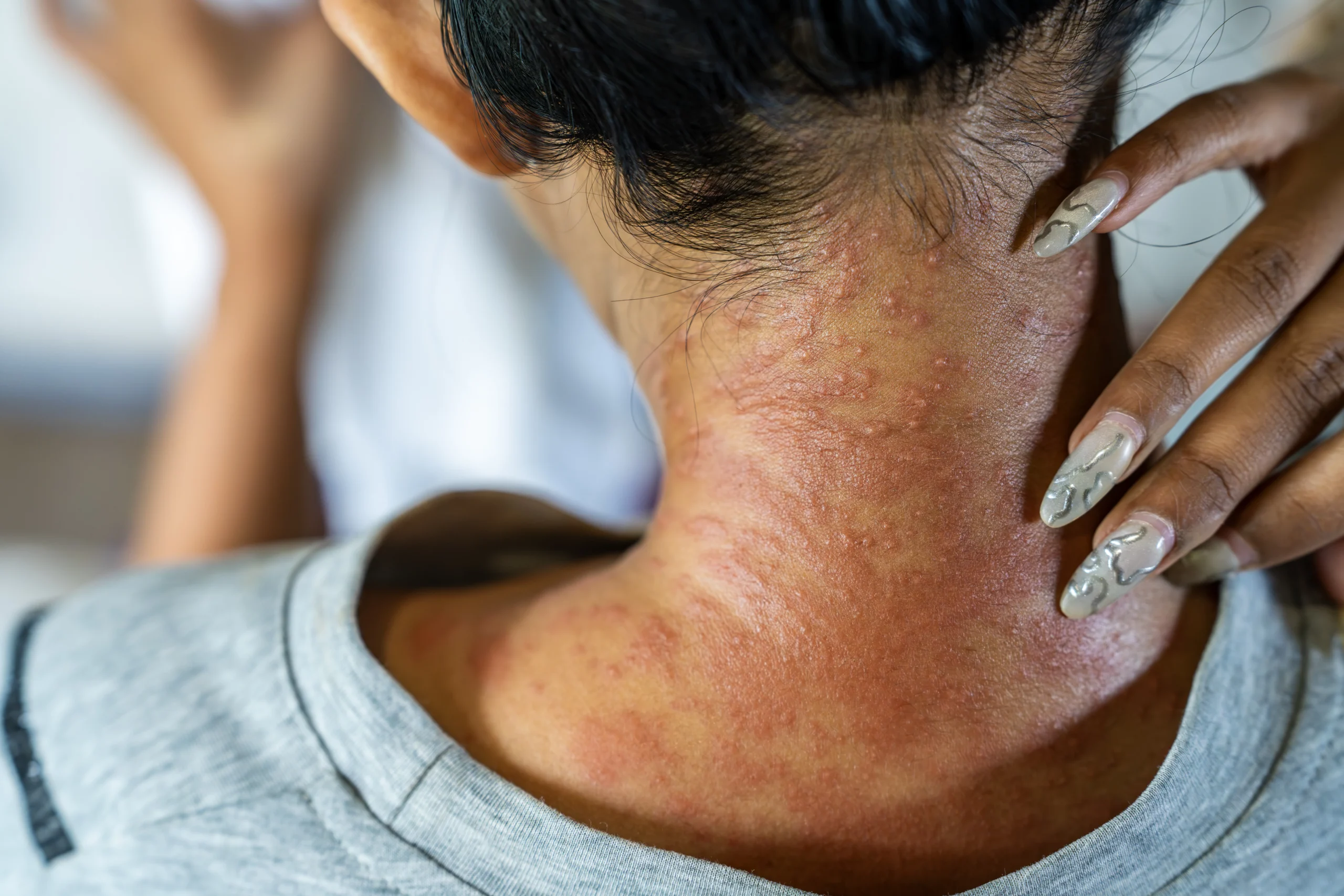
The most important thing to understand is that eczema doesn’t look red on South Asian skin. Instead of the typical red, inflamed patches you see in medical textbooks, eczema on our skin appears as:
- Grey or ashen patches
- Purple or violet discoloration
- Dark brown areas
- Darker patches than your normal skin tone
This difference in appearance often leads to delayed diagnosis or misdiagnosis, as many healthcare providers are trained to look for redness. On darker skin tones, erythema (redness) commonly appears violaceous or may be missed completely, and scoring systems that consider erythema significantly underestimate the severity of eczema in dark skin.
Additional Features Common in South Asian Skin
Research shows that people with darker skin tones are more likely to experience:
- Lichenification: Thickened, leathery patches from chronic scratching
- Papular eczema: Small raised bumps, especially on the torso and limbs
- Follicular accentuation: Bumps around hair follicles resembling goosebumps
- Post-inflammatory hyperpigmentation: Dark spots that persist after healing
- Hyperlinearity of palms: More pronounced palm lines
10 Evidence-Based Tips for Managing Eczema
1. Break the Itch-Scratch Cycle
The most crucial step in eczema management is stopping the destructive cycle where scratching leads to more inflammation, which leads to more itching. When you feel the urge to scratch:
Apply moisturizer immediately – don’t wait. Look for products containing:
- Colloidal oatmeal: Contains natural anti-inflammatory compounds that reduce itching and help retain moisture
- Ceramides: Essential for people with eczema who are naturally deficient in these protective barrier lipids
- Glycerin: A humectant that draws moisture into your skin
Alternative strategies:
- Apply cool compresses to itchy areas
- Press firmly on itchy spots instead of scratching
- Keep nails trimmed short
- Wear cotton gloves at night to prevent unconscious scratching
2. Choose Your Clothing Wisely
Your wardrobe choices significantly impact your eczema management:
Best choices for Pakistan’s climate:
- 100% cotton clothing – especially important in our hot, humid weather
- Cotton shalwar kameez over synthetic fabrics
- Cotton or bamboo hijabs for those who cover their hair
- Loose-fitting garments that don’t rub against sensitive skin
Avoid completely:
- Wool in any form – sweaters, shawls, socks
- Synthetic fabrics that trap heat and moisture
- Tight-fitting clothing that creates friction
3. Wash New Clothes Before Wearing
New clothing contains manufacturing chemicals that can trigger eczema flares:
- Formaldehyde-based wrinkle treatments
- Blue dyes (particularly irritating to eczema-prone skin)
- Sizing chemicals used in fabric production
Always wash new clothes 2-3 times before wearing, using fragrance-free detergent with an extra rinse cycle.
4. Control Temperature and Humidity
Pakistan’s varied climate presents unique challenges for eczema management:
Summer season (May-September):
- Use air conditioning to maintain cool temperatures
- Take lukewarm showers immediately after sweating
- Sweat is a major irritant for eczema-prone skin
Winter season (November-February):
- Use a cool-mist humidifier at night (essential for dry air in Punjab/Islamabad regions)
- Apply moisturizer more frequently
- Combat the dry air that pulls moisture from your skin
Monsoon season (July-August):
- Ensure clothes are completely dry before wearing
- Use dehumidifiers if possible
- Maintain good ventilation to prevent mold growth
Smog season (October-December):
- Monitor Air Quality Index (AQI) daily
- Use indoor air purifiers
- Rinse face and hands when coming indoors
- Stay inside on high pollution days (AQI over 150)
5. Master the “Soak and Smear” Bathing Technique
Proper bathing is essential for removing environmental triggers while protecting your skin barrier:
The correct approach:
- Daily evening baths to remove pollutants and allergens
- Lukewarm water only (never hot or cold)
- Maximum 10 minutes duration
- Minimal soap use – choose gentle, non-soap cleansers
The “Soak and Smear” technique:
- After bathing, while skin is still damp
- Pat gently with towel (don’t rub)
- Within 3 minutes, apply thick moisturizer generously
- This locks in moisture and prevents water loss
Additional rinse times:
- After exercising (to remove sweat)
- After swimming (to remove chlorine and chemicals)
6. Prioritize Stress Management and Sleep
Stress directly triggers eczema flares through hormonal pathways. When you’re stressed, your brain releases cortisol, which signals your immune system to drive inflammation into your skin.
For adults:
- Aim for 7-8 hours of quality sleep nightly
- Practice 20 minutes of daily physical activity
- Incorporate meditation, deep breathing, or prayer for 10 minutes daily
For parents: Children pick up on your stress levels, which affects their skin. Create calm bedtime routines with soft voices, dim lights, and soothing environments.
Special considerations:
- Exam season: Plan ahead with increased moisturizing
- Wedding season: Prepare for stress, late nights, and makeup triggers
- Ramadan: Maintain skincare routines despite schedule changes
7. Minimize Environmental Triggers
Environmental allergens are particularly challenging in Pakistan:
Dust mites (very common):
- Vacuum bedroom furniture weekly
- Wash bedding in hot water regularly
- Bathe before bed to remove dead skin cells
- Consider dust mite-proof mattress covers
Air pollution (critical for Pakistan): Air pollution in major Pakistani cities is a major but often overlooked eczema trigger. During smog season:
- Check AQI daily using smartphone apps
- Stay indoors when AQI exceeds 150
- Use indoor air purifiers if possible
- Wash face and hands immediately after outdoor exposure
- Change clothes when coming inside
Mold (monsoon season):
- Keep rooms well-ventilated
- Clean air conditioning units regularly
- Fix water leaks immediately
- Don’t leave wet towels or clothes around
8. Simplify Your Skincare Routine
Less is more when dealing with eczema-prone skin. Each additional product increases exposure to potential irritants.
Essential 3-step routine:
- Gentle cleanser: Non-soap, fragrance-free (use only when necessary)
- Moisturizer: Thick cream or ointment with ceramides or colloidal oatmeal (apply twice daily minimum)
- Sunscreen: Mineral/physical formulations with zinc oxide or titanium dioxide
Avoid completely:
- Fragrances (natural and synthetic)
- Essential oils
- Harsh exfoliants or scrubs
- Alpha and beta hydroxy acids
- Products with long ingredient lists
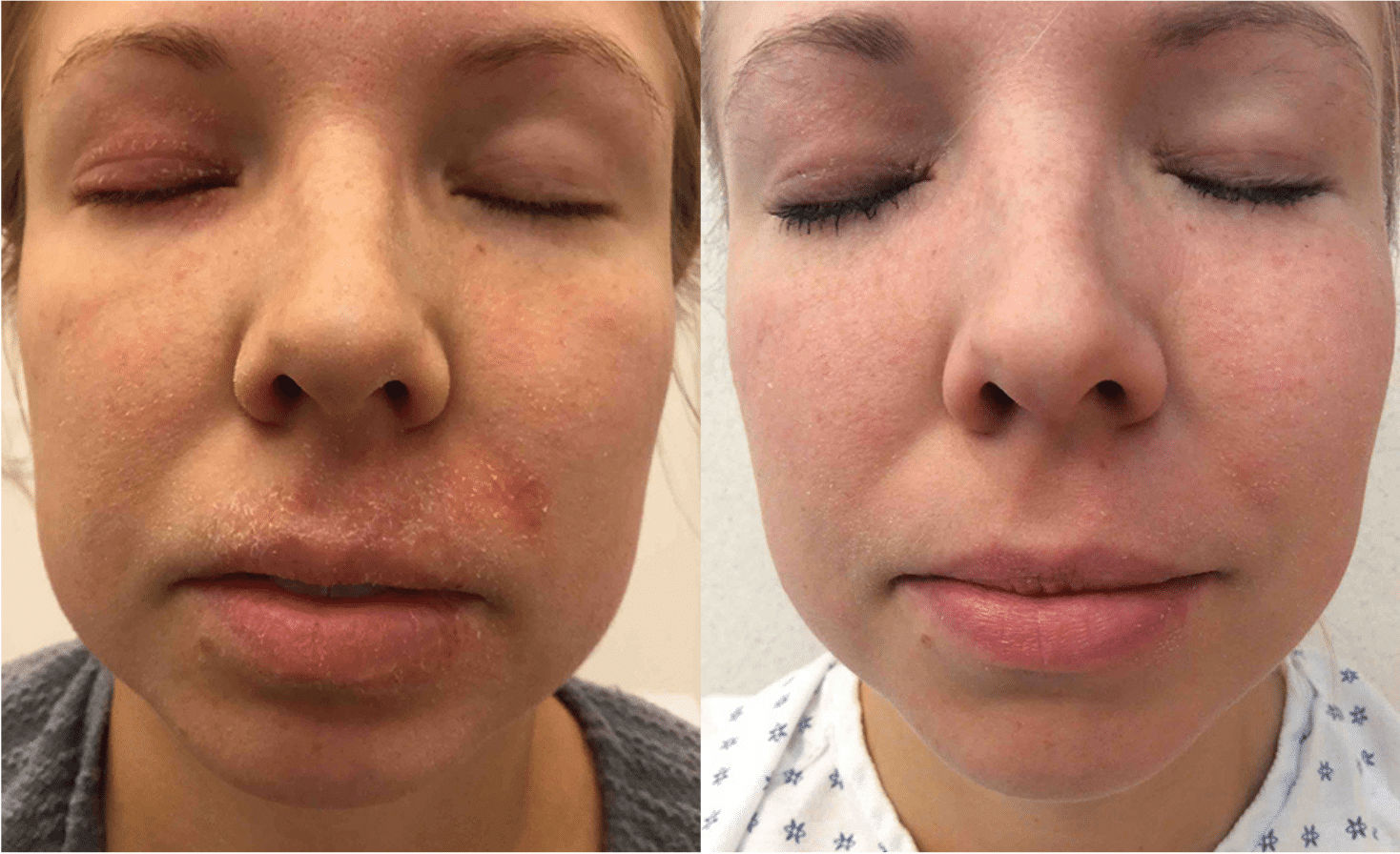
Makeup considerations: Remove makeup completely each evening. Eye makeup (eyeshadow, eyeliner, mascara) commonly triggers eyelid eczema. Traditional kohl can be particularly irritating for eczema-prone eyelids.
9. Address Post-Inflammatory Pigmentation
This is extremely important for South Asian skin, as the dark spots remaining after eczema heals can be more distressing than the eczema itself.
Why it happens: When eczema-affected skin is inflamed, it stimulates melanocytes (pigment-producing cells). In darker skin tones, melanocytes are much more reactive, leading to dark brown or black patches that can last 6-12 months or longer.
Prevention (much easier than treatment):
- Control eczema quickly – don’t let flares persist
- Minimize scratching – increases inflammation and worsens pigmentation
- Sun protection is essential – UV exposure darkens and prolongs pigmentation
- Daily sunscreen use (SPF 30 minimum, reapply every 2 hours outdoors)
Treatment options (after eczema is controlled):
- Hydroquinone cream
- Tretinoin (retinoid)
- Azelaic acid
- Vitamin C serums
- Professional treatments like Q-switched Nd:YAG laser (safe for darker skin)
Timeline expectations: Post-inflammatory hyperpigmentation takes time to fade – minimum 6 months, often 12-18 months for complete resolution.
10. Know When to See a Dermatologist
Recognize these urgent warning signs:
Seek immediate medical attention for:
- Signs of infection: Oozing, yellow crusting, increased warmth, fever
- Severe uncontrolled eczema: Large body areas affected, sleep disruption
- Facial or eyelid involvement: Higher infection risk, can affect vision
What dermatologists can offer:
- Prescription treatments: Topical corticosteroids, calcineurin inhibitors, newer medications like crisaborole or ruxolitinib cream
- Systemic medications: For moderate to severe cases, including dupilumab (highly effective biologic injection) or JAK inhibitors
- Phototherapy: UV light treatment for widespread eczema
Specialized care: Experience with darker skin tones and pigmentation concerns
Pakistan-Specific Considerations
Climate Management
- Monsoon season: Ensure complete drying of clothes and avoid sitting on damp furniture
- Winter dryness: Peak eczema season in Punjab requires religious humidifier use
- Smog season: Often overlooked but critical – invest in air purifiers and limit outdoor activities
Cultural Factors
- Wedding season preparation: Meet with dermatologists 2-3 months in advance
- Ramadan considerations: Plan for disrupted sleep schedules and continued skincare routines
- Hard water issues: Many Pakistani cities have mineral-rich water requiring filters or softeners
Debunking Common Myths
Myth: “Eczema is contagious” Truth: Eczema is NOT contagious – it’s a genetic condition with environmental triggers
Myth: “Topical steroids are dangerous” Truth: When prescribed correctly, topical steroids are safe and effective. Problems only occur with prolonged misuse
Myth: “Children will grow out of eczema” Truth: While some improvement occurs with age, untreated eczema causes significant complications and should be managed immediately
Myth: “Natural products are always safer” Truth: Many natural ingredients like essential oils are highly irritating to eczema skin
Setting Realistic Expectations
Eczema is a chronic condition, which means long-term management rather than a quick cure. However, “well-controlled” eczema means:
- Rare, mild, and brief flares
- Minimal daily itching
- Good sleep quality
- Normal activity levels
- Significantly improved quality of life
Your Path Forward
Managing eczema requires consistency and patience, but the results are worth it. Many children improve significantly with age, and adults can learn to manage eczema so effectively that it barely impacts their lives.
Your commitment involves:
- Daily moisturizing (twice minimum) – non-negotiable
- Taking prescribed medications as directed
- Lifestyle modifications
- Patience – improvement takes weeks to months
- Being proactive during high-risk periods
Remember: With the right knowledge, consistency, and proper treatment, you can take control of your eczema. Your skin doesn’t have to control your life.
Important note: This information is for educational purposes and should not replace professional medical advice. Always consult with a qualified dermatologist, particularly one experienced with treating skin of color, for personalized treatment plans.
The unique challenges of eczema in South Asian skin are real, but so are the solutions. With proper understanding and management, you can achieve healthy, comfortable skin and improved quality of life.